50 REASONS TO
OPPOSE
FLUORIDATION


Introduction

Dr. Paul Connett
In Europe, only Ireland (73%), Poland (1%), Serbia (3%), Spain (11%), and the U.K. (11%) fluoridate any of their water. Most developed countries, including Japan and 97% of the western European population, do not consume fluoridated water.
In the U.S., about 70% of public water supplies are fluoridated. This equates to approximately 185 million people, which is over half the number of people drinking artificially fluoridated water worldwide. Some countries have areas with high natural fluoride levels in the water. Unfortunately, because government officials and dental leaders have put so much of their credibility on the line defending fluoridation, and because of the huge liabilities waiting in the wings if they admit that fluoridation has caused an increase in hip fracture, arthritis, bone cancer, brain disorders or thyroid problems, it will be very difficult for them to speak honestly and openly about the issue. But they must, not only to protect millions of people from unnecessary harm, but to protect the notion that, at its core, public health policy must be based on sound science, not political expediency.These include India, China and parts of Africa. In these countries measures are being taken to remove the fluoride because of the health problems that fluoride can cause.
Fluoridation is a bad medical practice
1) Fluoride is the only chemical added to water for the purpose of medical treatment. The U.S. Food and Drug Administration (FDA) classifies fluoride as a drugwhen used to prevent or mitigate disease (FDA 2000). As a matter of basic logic, adding fluoride to water for the sole purpose of preventing tooth decay (a non-waterborne disease) is a form of medical treatment. All other water treatment chemicals are added to improve the water’s quality or safety, which fluoride does not do.
2) Fluoridation is unethical. Informed consent is standard practice for all medication, and one of the key reasons why most of Western Europe has ruled against fluoridation. With water fluoridation we are allowing governments to do to whole communities (forcing people to take a medicine irrespective of their consent) what individual doctors cannot do to individual patients.
Put another way: Does a voter have the right to require that their neighbor ingest a certain medication (even if it is against that neighbor’s will)?
3) The dose cannot be controlled. Once fluoride is put in the water it is impossible to control the dose each individual receives because people drink different amounts of water. Being able to control the dose a patient receives is critical. Some people (e.g., manual laborers, athletes, diabetics, and people with kidney disease) drink substantially more water than others.
50 REASONS TO OPPOSE FLUORIDATION4) The fluoride goes to everyone regardless of age, health or vulnerability. According to Dr. Arvid Carlsson, the 2000 Nobel Laureate in Medicine and Physiology and one of the scientists who helped keep fluoridation out of Sweden:
“Water fluoridation goes against leading principles of pharmacotherapy, which is progressing from a stereotyped medication — of the type 1 tablet 3 times a day — to a much more individualized therapy as regards both dosage and selection of drugs. The addition of drugs to the drinking water means exactly the opposite of an individualized therapy” (Carlsson 1978).
5) People now receive fluoride from many other sources besides water. Fluoridated water is not the only way people are exposed to fluoride. Other sources of fluoride include food and beverages processed with fluoridated water (Kiritsy 1996; Heilman 1999), fluoridated dental products (Bentley 1999; Levy 1999), mechanically deboned meat (Fein 2001), tea (Levy 1999), and pesticide residues (e.g., from cryolite) on food (Stannard 1991; Burgstahler 1997). It is now widely acknowledged that exposure to non-water sources of fluoride has significantly increased since the water fluoridation program first began (NRC 2006).
6) Fluoride is not an essential nutrient. No disease, not even tooth decay, is caused by a “fluoride deficiency.”(NRC 1993; Institute of Medicine 1997, NRC 2006). Not a single biological process has been shown to require fluoride. On the contrary there is extensive evidence that fluoride can interfere with many important biological processes. Fluoride interferes with numerous enzymes (Waldbott 1978). In combination with aluminum, fluoride interferes with G-proteins (Bigay 1985, 1987). Such interactions give aluminum-fluoride complexes the potential to interfere with signals from growth factors, hormones and neurotransmitters (Strunecka & Patocka 1999; Li 2003). More and more studies indicate that fluoride can interfere withbiochemistry in fundamental ways (Barbier 2010).
7) The level in mothers’ milk is very low. Considering reason #6 it is perhaps not surprising that the level of fluoride in mother’s milk is remarkably low (0.004 ppm, NRC, 2006). This means that a bottle-fed baby consuming fluoridated water (0.6 – 1.2 ppm) can get up to 300 times more fluoride than a breast-fed baby. There are no benefits (see reasons #11-19), only risks (see reasons #21-36), for infants ingesting this heightened level of fluoride at such an early age (an age where susceptibility to environmental toxins is particularly high).
8 ) Fluoride accumulates in the body. Healthy adult kidneys excrete 50 to 60% of the fluoride ingested each day (Marier & Rose 1971). The remainder accumulates in the body, largely in calcifying tissues such as the bones and pineal gland (Luke 1997, 2001). Infants and children excrete less fluoride from their kidneys and take up to 80% of ingested fluoride into their bones (Ekstrahttps://blogger.googleusercontent.com/img/b/R29vZ2xl/AVvXsEhrAecCk9XjhBJHEM_ozVFJX-589mM18Qvi2EgXi6ZfmpdrrdyCf3xnfdmqDRFbICf2WTdama8hzXP2pfPhTSt2DjiyIZ_3wN9XkIcZnVxbP9TVhiRP-0jUYROnfEdWpbHDhGVo968bxp4/s1600/sodiumfluoride.jpgnd 1994). The fluoride concentration in bone steadily increases over a lifetime (NRC 2006).
9) No health agency in fluoridated countries is monitoring fluoride exposure or side effects. No regular measurements are being made of the levels of fluoride in urine, blood, bones, hair, or nails of either the general population or sensitive subparts of the population (e.g., individuals with kidney disease).
10) There has never been a single randomized clinical trial to demonstrate fluoridation’s effectiveness or safety. Despite the fact that fluoride has been added to community water supplies for over 60 years, “there have been no randomized trials of water fluoridation” (Cheng 2007). Randomized studies are the standard method for determining the safety and effectiveness of any purportedly beneficial medical treatment. In 2000, the British Government’s “York Review” could not give a single fluoridation trial a Grade A classification – despite 50 years of research (McDonagh 2000). The U.S. Food and Drug Administration (FDA) continues to classify fluoride as an “unapproved new drug.”
Swallowing fluoride provides no (or very little) benefit
11) Benefit is topical not systemic. The Centers for Disease Control and Prevention (CDC, 1999, 2001) has now acknowledged that the mechanism of fluoride’s benefits are mainly topical, not systemic. There is no need whatsoever, therefore, to swallow fluoride to protect teeth. Since the purported benefit of fluoride is topical, and the risks are systemic, it makes more sense to deliver the fluoride directly to the tooth in the form of toothpaste. Since swallowing fluoride is unnecessary, and potentially dangerous, there is no justification for forcing people (against their will) to ingest fluoride through their water supply.
12) Fluoridation is not necessary. Most western, industrialized countries haverejected water fluoridation, but have nevertheless experienced the same decline in childhood dental decay as fluoridated countries. (See data from World Health Organization presented graphically in Figure).
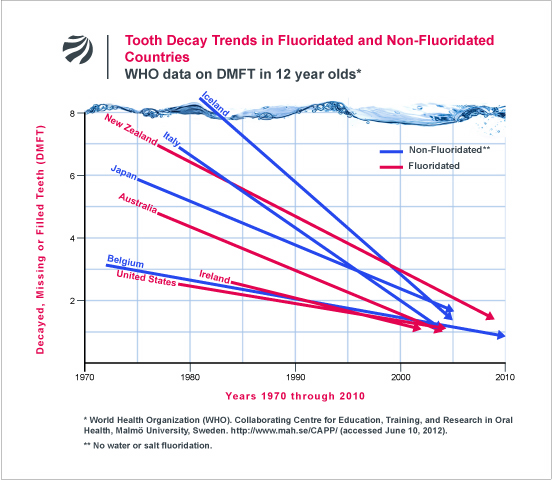
13) Fluoridation’s role in the decline of tooth decay is in serious doubt. Thelargest survey ever conducted in the US (over 39,000 children from 84 communities) by the National Institute of Dental Research showed little difference in tooth decay among children in fluoridated and non-fluoridated communities (Hileman 1989). According to NIDR researchers, the study found an average difference of only 0.6 DMFS (Decayed, Missing, and Filled Surfaces) in the permanent teeth of children aged 5-17 residing their entire lives in either fluoridated or unfluoridated areas (Brunelle & Carlos, 1990). This difference is less than one tooth surface, and less than 1% of the 100+ tooth surfaces available in a child’s mouth. Large surveys from three Australian states have found even less of a benefit, with decay reductions ranging from 0 to 0.3 of one permanent tooth surface (Spencer 1996; Armfield & Spencer 2004). None of these studies have allowed for the possible delayed eruption of the teeth that may be caused by exposure to fluoride, for which there is some evidence (Komarek 2005). A one-year delay in eruption of the permanent teeth would eliminate the very small benefit recorded in these modern studies.
14) NIH-funded study on individual fluoride ingestion and tooth decay found no significant correlation. A multi-million dollar, U.S. National Institutes of Health (NIH)-funded study found no significant relationship between tooth decay and fluoride intakeamong children. (Warren 2009) This is the first time tooth decay has been investigated as a function of individual exposure (as opposed to mere residence in a fluoridated community).
15) Tooth decay is high in low-income communities that have been fluoridated for years. Despite some claims to the contrary, water fluoridation cannot prevent theoral health crises that result from rampant poverty, inadequate nutrition, and lack of access to dental care. There have been numerous reports of severe dental crises in low-income neighborhoods of US cities that have been fluoridated for over 20 years (e.g., Boston, Cincinnati, New York City, and Pittsburgh). In addition, research has repeatedly found fluoridation to be ineffective at preventing the most serious oral health problem facing poor children, namely “baby bottle tooth decay,” otherwise known as early childhood caries (Barnes 1992; Shiboski 2003).
16) Tooth decay does not go up when fluoridation is stopped. Where fluoridation has been discontinued in communities from Canada, the former East Germany, Cuba and Finland, dental decay has not increased but has generally continued to decrease (Maupomé 2001; Kunzel & Fischer, 1997, 2000; Kunzel 2000; Seppa 2000).
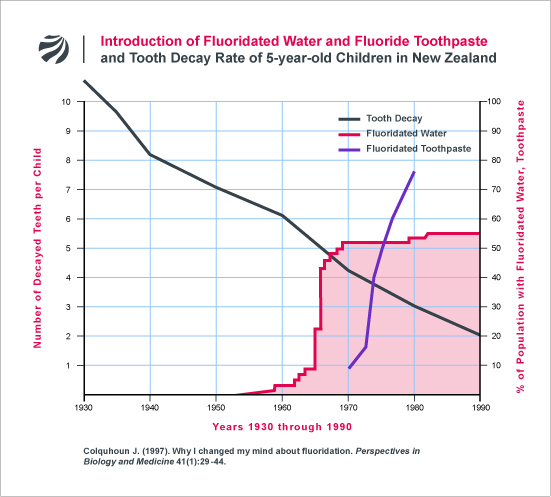
17) Tooth decay was coming down before fluoridation started. Modern research shows that decay rates were coming down before fluoridation was introduced in Australia and New Zealand and have
continued to decline even after its benefits would have been maximized. (Colquhoun 1997; Diesendorf 1986). As the following figure indicates, many other factors are responsible for the decline of tooth decay that has been universally reported throughout the western world.
continued to decline even after its benefits would have been maximized. (Colquhoun 1997; Diesendorf 1986). As the following figure indicates, many other factors are responsible for the decline of tooth decay that has been universally reported throughout the western world.
18) The studies that launched fluoridation were methodologically flawed. The early trials conducted between 1945 and 1955 in North America that helped to launch fluoridation, have been heavily criticized for their poor methodology and poor choice of control communities (De Stefano 1954; Sutton 1959, 1960, 1996; Ziegelbecker 1970). According to Dr. Hubert Arnold, a statistician from the University of California at Davis, the early fluoridation trials “are especially rich in fallacies, improper design, invalid use of statistical methods, omissions of contrary data, and just plain muddleheadedness and hebetude.” Serious questions have also been raised about Trendley Dean’s (the father of fluoridation) famous 21-city study from 1942 (Ziegelbecker 1981).
Children are being over-exposed to fluoride
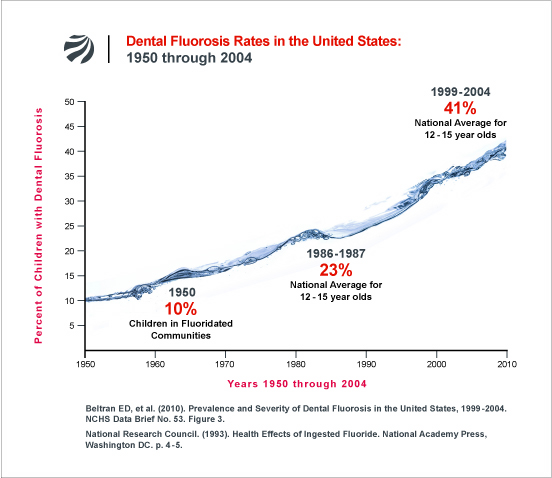
19) Children are being over-exposed to fluoride. The fluoridation program has massively failed to achieve one of its key objectives, i.e., to lower dental decay rates while limiting the occurrence of dental fluorosis (a discoloring of tooth enamel caused by too much fluoride. The goal of the early promoters of fluoridation was to limit dental fluorosis (in its very mild form) to10% of children (NRC 1993, pp. 6-7). In 2010, however, the Centers for Disease Control and Prevention (CDC) reported that 41% of American adolescents had dental fluorosis, with 8.6% having mild fluorosis and 3.6% having either moderate or severe dental fluorosis (Beltran-Aguilar 2010). As the 41% prevalence figure is a national average and includes children living in fluoridated and unfluoridated areas, the fluorosis rate in fluoridated communities will obviously be higher. The British Government’s York Review estimated that up to 48% of children in fluoridated areas worldwide have dental fluorosis in all forms, with 12.5% having fluorosis of aesthetic concern (McDonagh, 2000).
20) The highest doses of fluoride are going to bottle-fed babies. Because of their sole reliance on liquids for their food intake, infants consuming formula made with fluoridated water have the highest exposure to fluoride, by bodyweight, in the population. Because infant exposure to fluoridated water has been repeatedly found to be a major risk factor for developing dental fluorosis later in life (Marshall 2004; Hong 2006; Levy 2010), a number of dental researchers have recommended that parents of newborns not use fluoridated water when reconstituting formula (Ekstrand 1996; Pendrys 1998; Fomon 2000; Brothwell 2003; Marshall 2004). Even the American Dental Association (ADA), the most ardent institutional proponent of fluoridation, distributed a November 6, 2006 email alert to its members recommending that parents be advised that formula should be made with “low or no-fluoride water.” Unfortunately, the ADA has done little to get this information into the hands of parents. As a result, many parents remain unaware of the fluorosis risk from infant exposure to fluoridated water.
Evidence of harm to other tissues
21) Dental fluorosis may be an indicator of wider systemic damage. There have been many suggestions as to the possible biochemical mechanisms underlying the development of dental fluorosis (Matsuo 1998; Den Besten 1999; Sharma 2008; Duan 2011; Tye 2011) and they are complicated for a lay reader. While promoters of fluoridation are content to dismiss dental fluorosis (in its milder forms) as merely a cosmetic effect, it is rash to assume that fluoride is not impacting other developing tissues when it is visibly damaging the teeth by some biochemical mechanism (Groth 1973; Colquhoun 1997). Moreover, ingested fluoride can only cause dental fluorosis during the period before the permanent teeth have erupted (6-8 years), other tissues are potentially susceptible to damage throughout life. For example, in areas of naturally high levels of fluoride the first indicator of harm is dental fluorosis in children. In the same communities many older people develop skeletal fluorosis.
22) Fluoride may damage the brain. According to the National Research Council (2006), “it is apparent that fluorides have the ability to interfere with the functions of the brain.” In a review of the literature commissioned by the US Environmental Protection Agency (EPA), fluoride has been listed among about 100 chemicals for which there is “substantial evidence of developmental neurotoxicity.” Animal experiments show that fluoride accumulates in the brain and alters mental behavior in a manner consistent with a neurotoxic agent (Mullenix 1995). In total, there have now been over 100 animal experiments showing that fluoride can damage the brain and impact learning and behavior. According to fluoridation proponents, these animal studies can be ignored because high doses were used. However, it is important to note that rats generally require five times more fluoride to reach the same plasma levels in humans (Sawan 2010). Further, one animal experiment found effects at remarkably low doses (Varner 1998). In this study, rats fed for one year with 1 ppm fluoride in their water (the same level used in fluoridation programs), using either sodium fluoride or aluminum fluoride, had morphological changes to their kidneys and brains, an increased uptake of aluminum in the brain, and the formation of beta-amyloid deposits which are associated with Alzheimer’s disease. Other animal studies have found effects on the brain at water fluoride levels as low as 5 ppm (Liu 2010).
23) Fluoride may lower IQ. There have now been 33 studies from China, Iran, India and Mexico that have reported an association between fluoride exposure and reduced IQ. One of these studies (Lin 1991) indicates that even just moderate levels of fluoride exposure (e.g., 0.9 ppm in the water) can exacerbate the neurological defects of iodine deficiency. Other studies have found IQ reductions at 1.9 ppm (Xiang 2003a,b); 0.3-3.0 ppm (Ding 2011); 1.8-3.9 ppm (Xu 1994); 2.0 ppm (Yao 1996, 1997); 2.1-3.2 ppm (An 1992); 2.38 ppm (Poureslami 2011); 2.45 ppm (Eswar 2011); 2.5 ppm (Seraj 2006); 2.85 ppm (Hong 2001); 2.97 ppm (Wang 2001, Yang 1994); 3.15 ppm (Lu 2000); 4.12 ppm (Zhao 1996). In the Ding study, each 1 ppm increase of fluoride in urine was associated with a loss of 0.59 IQ points. None of these studies indicate an adequate margin of safety to protect all children drinking artificially fluoridated water from this affect. According to the National Research Council (2006), “the consistency of the results [in fluoride/IQ studies] appears significant enough to warrant additional research on the effects of fluoride on intelligence.” The NRC’s conclusion has recently been amplified by a team of Harvard scientists whose fluoride/IQ meta-review concludes that fluoride’s impact on the developing brain should be a “high research priority.” (Choi et al., 2012). Except for one small IQ study from New Zealand (Spittle 1998) no fluoridating country has yet investigated the matter.
24) Fluoride may cause non-IQ neurotoxic effects. Reduced IQ is not the only neurotoxic effect that may result from fluoride exposure. At least three human studies have reported an association between fluoride exposure and impaired visual-spatial organization (Calderon 2000; Li 2004; Rocha-Amador 2009); while four other studies have found an association between prenatal fluoride exposure and fetal brain damage(Han 1989; Du 1992; Dong 1993; Yu 1996).
25) Fluoride affects the pineal gland. Studies by Jennifer Luke (2001) show that fluoride accumulates in the human pineal gland to very high levels. In her Ph.D. thesis, Luke has also shown in animal studies that fluoride reduces melatonin production and leads to an earlier onset of puberty (Luke 1997). Consistent with Luke’s findings, one of the earliest fluoridation trials in the U.S. (Schlesinger 1956) reported that on average young girls in the fluoridated community reached menstruation 5 months earlier than girls in the non-fluoridated community. Inexplicably, no fluoridating country has attempted to reproduce either Luke’s or Schlesinger’s findings or examine the issue any further.
26) Fluoride affects thyroid function. According to the U.S. National Research Council (2006), “several lines of information indicate an effect of fluoride exposure onthyroid function.” In the Ukraine, Bachinskii (1985) found a lowering of thyroid function, among otherwise healthy people, at 2.3 ppm fluoride in water. In the middle of the 20th century, fluoride was prescribed by a number of European doctors to reduce the activity of the thyroid gland for those suffering from hyperthyroidism (overactive thyroid) (Stecher 1960; Waldbott 1978). According to a clinical study by Galletti and Joyet (1958), the thyroid function of hyperthyroid patients was effectively reduced at just 2.3 to 4.5 mg/day of fluoride ion. To put this finding in perspective, the Department of Health and Human Services (DHHS, 1991) has estimated that total fluoride exposure in fluoridated communities ranges from 1.6 to 6.6 mg/day. This is a remarkable fact, particularly considering the rampant and increasing problem of hypothyroidism (underactive thyroid) in the United States and other fluoridated countries. Symptoms of hypothyroidism include depression, fatigue, weight gain, muscle and joint pains, increased cholesterol levels, and heart disease. In 2010, the second most prescribed drug of the year was Synthroid (sodium levothyroxine) which is a hormone replacement drug used to treat an underactive thyroid.
27) Fluoride causes arthritic symptoms. Some of the early symptoms of skeletal fluorosis (a fluoride-induced bone and joint disease that impacts millions of people in India, China, and Africa), mimic the symptoms of arthritis (Singh 1963; Franke 1975; Teotia 1976; Carnow 1981; Czerwinski 1988; DHHS 1991). According to a review on fluoridation published in Chemical & Engineering News, “Because some of the clinical symptoms mimic arthritis, the first two clinical phases of skeletal fluorosis could be easily misdiagnosed” (Hileman 1988). Few, if any, studies have been done to determine the extent of this misdiagnosis, and whether the high prevalence of arthritis in America (1 in 3 Americans have some form of arthritis – CDC, 2002) and other fluoridated countries is related to growing fluoride exposure, which is highly plausible. Even when individuals in the U.S. suffer advanced forms of skeletal fluorosis (from drinking large amounts of tea), it has taken years of misdiagnoses before doctors finally correctly diagnosed the condition as fluorosis.
28) Fluoride damages bone. An early fluoridation trial (Newburgh-Kingston 1945-55) found a significant two-fold increase in cortical bone defects among children in the fluoridated community (Schlesinger 1956). The cortical bone is the outside layer of the bone and is important to protect against fracture. While this result was not considered important at the time with respect to bone fractures, it did prompt questions about a possible link to osteosarcoma (Caffey, 1955; NAS, 1977). In 2001, Alarcon-Herrera and co-workers reported a linear correlation between the severity of dental fluorosis and the frequency of bone fractures in both children and adults in a high fluoride area in Mexico.
29) Fluoride may increase hip fractures in the elderly. When high doses of fluoride (average 26 mg per day) were used in trials to treat patients with osteoporosis in an effort to harden their bones and reduce fracture rates, it actually led to a higher number of fractures, particularly hip fractures (Inkovaara 1975; Gerster 1983; Dambacher 1986; O’Duffy 1986; Hedlund 1989; Bayley 1990; Gutteridge 1990. 2002; Orcel 1990; Riggs 1990 and Schnitzler 1990). Hip fracture is a very serious issue for the elderly, often leading to a loss of independence or a shortened life. There have been over a dozen studies published since 1990 that have investigated a possible relationship between hip fractures and long term consumption of artificially fluoridated water or water with high natural levels. The results have been mixed – some have found an association and others have not. Some have even claimed a protective effect. One very important study in China, which examined hip fractures in six Chinese villages, found what appears to be a dose-related increase in hip fracture as the concentration of fluoride rose from 1 ppm to 8 ppm (Li 2001) offering little comfort to those who drink a lot of fluoridated water. Moreover, in the only human epidemiological study to assess bone strength as a function of bone fluoride concentration, researchers from the University of Toronto found that (as with animal studies) the strength of bone declined with increasing fluoride content (Chachra 2010). Finally, arecent study from Iowa (Levy 2009), published data suggesting that low-level fluoride exposure may have a detrimental effect on cortical bone density in girls (an effect that has been repeatedly documented in clinical trials and which has been posited as an important mechanism by which fluoride may increase bone fracture rates).
30) People with impaired kidney function are particularly vulnerable to bone damage. Because of their inability to effectively excrete fluoride, people with kidney disease are prone to accumulating high levels of fluoride in their bone and blood. As a result of this high fluoride body burden, kidney patients have an elevated risk for developing skeletal fluorosis. In one of the few U.S. studies investigating the matter, crippling skeletal fluorosis was documented among patients with severe kidney disease drinking water with just 1.7 ppm fluoride (Johnson 1979). Since severe skeletal fluorosis in kidney patients has been detected in small case studies, it is likely that larger, systematic studies would detect skeletal fluorosis at even lower fluoride levels.
31) Fluoride may cause bone cancer (osteosarcoma). A U.S. government-funded animal study found a dose-dependent increase in bone cancer (osteosarcoma) in fluoride-treated, male rats (NTP 1990). Following the results of this study, the National Cancer Institute (NCI) reviewed national cancer data in the U.S. and found a significantly higher rate of osteosarcoma (a bone cancer) in young men in fluoridated versus unfluoridated areas (Hoover et al 1991a). While the NCI concluded (based on an analysis lacking statistical power) that fluoridation was not the cause (Hoover et al 1991b), no explanation was provided to explain the higher rates in the fluoridated areas. A smaller study from New Jersey (Cohn 1992) found osteosarcoma rates to be up to 6 times higher in young men living in fluoridated versus unfluoridated areas. Other epidemiological studies of varying size and quality have failed to find this relationship (a summary of these can be found in Bassin, 2001 and Connett & Neurath, 2005). There are three reasons why a fluoride-osteosarcoma connection is plausible: First, fluoride accumulates to a high level in bone. Second, fluoride stimulates bone growth. And, third, fluoride can interfere with the genetic apparatus of bone cells in several ways; it has been shown to be mutagenic, cause chromosome damage, and interfere with the enzymes involved with DNA repair in both cell and tissue studies (Tsutsui 1984; Caspary 1987; Kishi 1993; Mihashi 1996; Zhang 2009). In addition to cell and tissue studies, a correlation between fluoride exposure and chromosome damage in humans has also been reported (Sheth 1994; Wu 1995; Meng 1997; Joseph 2000).
32) Proponents have failed to refute the Bassin-Osteosarcoma study. In 2001, Elise Bassin, a dentist, successfully defended her doctoral thesis at Harvard in which she found that young boys had a five-to-seven fold increased risk of getting osteosarcoma by the age of 20 if they drank fluoridated water during their mid-childhood growth spurt (age 6 to 8). The study was published in 2006 (Bassin 2006) but has been largely discounted by fluoridating countries because her thesis adviser Professor Chester Douglass (a promoter of fluoridation and a consultant for Colgate) promised a larger study that he claimed would discount her thesis (Douglass and Joshipura, 2006). Now, after 5 years of waiting the Douglass study has finally been published (Kim 2011) but in no way does this study discount Bassin’s findings. The study, which used far fewer controls than Bassin’s analysis, did not even attempt to assess the age-specific window of risk that Bassin identified. Indeed, by the authors’ own admission, the study had no capacity to assess the risk of osteosarcoma among children and adolescents (the precise population of concern). For a critique of the Douglass study, click here.
33) Fluoride may cause reproductive problems. Fluoride administered to animals at high doses wreaks havoc on the male reproductive system – it damages sperm and increases the rate of infertility in a number of different species (Kour 1980; Chinoy 1989; Chinoy 1991; Susheela 1991; Chinoy 1994; Kumar 1994; Narayana 1994a,b; Zhao 1995; Elbetieha 2000; Ghosh 2002; Zakrzewska 2002). In addition, an epidemiological study from the US found increased rates of infertility among couples living in areas with 3 ppm or more fluoride in the water (Freni 1994), two studies have found increased fertility among men living in high-fluoride areas of China and India (Liu 1988; Neelam 1987); four studies have found reduced level of circulating testosterone in males living in high fluoride areas (Hao 2010; Chen P 1997; Susheela 1996; Barot 1998), and a study of fluoride-exposed workers reported a “subclinical reproductive effect” (Ortiz-Perez 2003). While animal studies by FDA researchers have failed to find evidence of reproductive toxicity in fluoride-exposed rats (Sprando 1996, 1997, 1998), the National Research Council (2006) has recommended that, “the relationship between fluoride and fertility requires additional study.”
34) Some individuals are highly sensitive to low levels of fluoride as shown bycase studies and double blind studies. In one study, which lasted 13 years, Feltman and Kosel (1961) showed that about 1% of patients given 1 mg of fluoride each day developed negative reactions. Many individuals have reported suffering from symptoms such as fatigue, headaches, rashes and stomach and gastro intestinal tract problems, which disappear when they avoid fluoride in their water and diet. (Shea 1967; Waldbott 1978; Moolenburgh 1987) Frequently the symptoms reappear when they are unwittingly exposed to fluoride again (Spittle, 2008). No fluoridating government has conducted scientific studies to take this issue beyond these anecdotal reports. Without the willingness of governments to investigate these reports scientifically, should we as a society be forcing these people to ingest fluoride?
35) Other subsets of population are more vulnerable to fluoride’s toxicity. In addition to people suffering from impaired kidney function discussed in reason #30 other subsets of the population are more vulnerable to fluoride’s toxic effects. According to the Agency for Toxic Substances and Disease Registry (ATSDR 1993) these include: infants, the elderly, and those with diabetes mellitus. Also vulnerable are those who suffer from malnutrition (e.g., calcium, magnesium, vitamin C, vitamin D and iodine deficiencies and protein-poor diets) and those who have diabetes insipidus. See: Greenberg 1974; Klein 1975; Massler & Schour 1952; Marier & Rose 1977; Lin 1991; Chen 1997; Seow 1994; Teotia 1998.
No Margin of Safety
36) There is no margin of safety for several health effects. No one can deny that high natural levels of fluoride damage health. Millions of people in India and China have had their health compromised by fluoride. The real question is whether there is an adequate margin of safety between the doses shown to cause harm in published studies and the total dose people receive consuming uncontrolled amounts of fluoridated water and non-water sources of fluoride. This margin of safety has to take into account the wide range of individual sensitivity expected in a large population (a safety factor of 10 is usually applied to the lowest level causing harm). Another safety factor is also needed to take into account the wide range of doses to which people are exposed. There is clearly no margin of safety for dental fluorosis (CDC, 2010) and based on the following studies nowhere near an adequate margin of safety for lowered IQ (Xiang 2003a,b; Ding 2011; Choi 2012); lowered thyroid function (Galletti & Joyet 1958; Bachinskii 1985; Lin 1991); bone fractures in children (Alarcon-Herrera 2001) or hip fractures in the elderly (Kurttio 1999; Li 2001). All of these harmful effects are discussed in the NRC (2006) review.
Environmental Justice
37) Low-income families penalized by fluoridation. Those most likely to suffer from poor nutrition, and thus more likely to be more vulnerable to fluoride’s toxic effects, are the poor, who unfortunately, are the very people being targeted by new fluoridation programs. While at heightened risk, poor families are least able to afford avoiding fluoride once it is added to the water supply. No financial support is being offered to these families to help them get alternative water supplies or to help pay the costs of treating unsightly cases of dental fluorosis.
38) Black and Hispanic children are more vulnerable to fluoride’s toxicity. According to the CDC’s national survey of dental fluorosis, black and Mexican-American children have significantly higher rates of dental fluorosis than white children (Beltran-Aguilar 2005, Table 23). The recognition that minority children appear to be more vulnerable to toxic effects of fluoride, combined with the fact that low-income families are less able to avoid drinking fluoridated water, has prompted prominent leaders in the environmental-justice movement to oppose mandatory fluoridation in Georgia. In a statement issued in May 2011, Andrew Young, a colleague of Martin Luther King, Jr., and former Mayor of Atlanta and former US Ambassador to the United Nations, stated:
“I am most deeply concerned for poor families who have babies: if they cannot afford unfluoridated water for their babies’ milk formula, do their babies not count? Of course they do. This is an issue of fairness, civil rights, and compassion. We must find better ways to prevent cavities, such as helping those most at risk for cavities obtain access to the services of a dentist…My father was a dentist. I formerly was a strong believer in the benefits of water fluoridation for preventing cavities. But many things that we began to do 50 or more years ago we now no longer do, because we have learned further information that changes our practices and policies. So it is with fluoridation.”
39) Minorities are not being warned about their vulnerabilities to fluoride. The CDC is not warning black and Mexican-American children that they have higher rates of dental fluorosis than Caucasian children (see #38). This extra vulnerability may extend to other toxic effects of fluoride. Black Americans have higher rates of lactose intolerance, kidney problems and diabetes, all of which may exacerbate fluoride’s toxicity.
40) Tooth decay reflects low-income not low-fluoride intake. Since dental decay is most concentrated in poor communities, we should be spending our efforts trying to increase the access to dental care for low-income families. The highest rates of tooth decay today can be found in low-income areas that have been fluoridated for many years. The real “Oral Health Crisis” that exists today in the United States, is not a lack of fluoride but poverty and lack of dental insurance. The Surgeon General has estimated that 80% of dentists in the US do not treat children on Medicaid.
The largely untested chemicals used in fluoridation programs
41) The chemicals used to fluoridate water are not pharmaceutical grade. Instead, they largely come from the wet scrubbing systems of the phosphate fertilizer industry. These chemicals (90% of which are sodium fluorosilicate and fluorosilicic acid), are classified hazardous wastes contaminated with various impurities. Recent testing by the National Sanitation Foundation suggest that the levels of arsenic in these silicon fluorides are relatively high (up to 1.6 ppb after dilution into public water) and of potential concern (NSF 2000 and Wang 2000). Arsenic is a known human carcinogen for which there is no safe level. This one contaminant alone could be increasing cancer rates – and unnecessarily so.
42) The silicon fluorides have not been tested comprehensively. The chemical usually tested in animal studies is pharmaceutical grade sodium fluoride, not industrial grade fluorosilicic acid. Proponents claim that once the silicon fluorides have been diluted at the public water works they are completely dissociated to free fluoride ions and hydrated silica and thus there is no need to examine the toxicology of these compounds. However, while a study from the University of Michigan (Finney et al., 2006) showed complete dissociation at neutral pH, in acidic conditions (pH 3) there was a stable complex containing five fluoride ions. Thus the possibility arises that such a complex may be regenerated in the stomach where the pH lies between 1 and 2.
43) The silicon fluorides may increase lead uptake into children’s blood. Studies by Masters and Coplan (1999, 2000, 2007), and to a lesser extent Macek (2006), show an association between the use of fluorosilicic acid (and its sodium salt) to fluoridate water and an increased uptake of lead into children’s blood. Because of lead’s acknowledged ability to damage the developing brain, this is a very serious finding. Nevertheless, it is being largely ignored by fluoridating countries. This association received some strong biochemical support from an animal study by Sawan et al. (2010) who found that exposure of rats to a combination of fluorosilicic acid and lead in their drinking water increased the uptake of lead into blood some threefold over exposure to lead alone.
44) Fluoride may leach lead from pipes, brass fittings and soldered joints. In tightly controlled laboratory experiments, Maas et al (2007) have shown that fluoridating agents in combination with chlorinating agents such as chloroamine increase the leaching of lead from brass fittings used in plumbing. While proponents may argue about the neurotoxic effects of low levels of fluoride there is no argument that lead at very low levels lowers IQ in children.
Continued promotion of fluoridation is unscientific
45) Key health studies have not been done. In the January 2008 issue of Scientific American, Professor John Doull, the chairman of the important 2006 National Research Council review, Fluoride in Drinking Water: A Review of EPA’s Standards, is quoted as saying:
What the committee found is that we’ve gone with the status quo regarding fluoride for many years—for too long really—and now we need to take a fresh look . . . In the scientific community people tend to think this is settled. I mean, when the U.S. surgeon general comes out and says this is one of the top 10 greatest achievements of the 20th century, that’s a hard hurdle to get over. But when we looked at the studies that have been done, we found that many of these questions are unsettled and we have much less information than we should, considering how long this [fluoridation] has been going on.
The absence of studies is being used by promoters as meaning the absence of harm. This is an irresponsible position.
46) Endorsements do not represent scientific evidence. Many of those promoting fluoridation rely heavily on a list of endorsements. However, the U.S. PHS first endorsed fluoridation in 1950, before one single trial had been completed and before any significant health studies had been published (see chapters 9 and 10 in The Case Against Fluoride for the significance of this PHS endorsement for the future promotion of fluoridation). Many other endorsements swiftly followed with little evidence of any scientific rational for doing so. The continued use of these endorsements has more to do with political science than medical science.
47) Review panels hand-picked to deliver a pro-fluoridation result. Every so often, particularly when their fluoridation program is under threat, governments of fluoridating countries hand-pick panels to deliver reports that provide the necessary re-endorsement of the practice. In their recent book Fluoride Wars (2009), which is otherwise slanted toward fluoridation, Alan Freeze and Jay Lehr concede this point when they write:
There is one anti-fluoridationist charge that does have some truth to it. Anti-fluoride forces have always claimed that the many government-sponsored review panels set up over the years to assess the costs and benefits of fluoridation were stacked in favor of fluoridation. A review of the membership of the various panels confirms this charge. The expert committees that put together reports by the American Association for the Advancement of Science in 1941, 1944 and 1954; the National Academy of Sciences in 1951, 1971, 1977 and 1993; the World Health Organization in 1958 and 1970; and the U.S. Public Health Service in 1991 are rife with the names of well-known medical and dental researchers who actively campaigned on behalf of fluoridation or whose research was held in high regard in the pro-fluoridation movement. Membership was interlocking and incestuous.
The most recent examples of these self-fulfilling prophecies have come from the Irish Fluoridation Forum (2002); the National Health and Medical Research Council (NHMRC, 2007) and Health Canada (2008, 2010). The latter used a panel of six experts to review the health literature. Four of the six were pro-fluoridation dentists and the other two had no demonstrated expertise on fluoride. A notable exception to this trend was the appointment by the U.S. National Research Council of the first balanced panel of experts ever selected to look at fluoride’s toxicity in the U.S. This panel of twelve reviewed the US EPA’s safe drinking water standards for fluoride. After three and half years the panel concluded in a 507- page report that the safe drinking water standard was not protective of health and a new maximum contaminant level goal (MCLG) should be determined (NRC, 2006). If normal toxicological procedures and appropriate margins of safety were applied to their findings this report should spell an end to water fluoridation. Unfortunately in January of 2011 the US EPA Office of Water made it clear that they would not determine a value for the MCLG that would jeopardize the water fluoridation program (EPA press release, Jan 7, 2011. Once again politics was allowed to trump science.
More and more independent scientists oppose fluoridation
48) Many scientists oppose fluoridation. Proponents of fluoridation have maintained for many years— despite the fact that the earliest opponents of fluoridation were biochemists—that the only people opposed to fluoridation are not bona fide scientists. Today, as more and more scientists, doctors, dentists and other professionals, read the primary literature for themselves, rather than relying on self-serving statements from the ADA and the CDC, they are realizing that they and the general public have not been diligently informed by their professional bodies on this subject. As of January 2012, over 4,000 professionals have signed a statement calling for an end to water fluoridation worldwide. This statement and a list of signatories can be found on the website of the Fluoride Action Network. A glimpse of the caliber of those opposing fluoridation can be gleaned by watching the 28-minute video “Professional Perspectives on Water fluoridation” which can be viewed online at the same FAN site.
Proponents’ dubious tactics
49) Proponents usually refuse to defend fluoridation in open debate. While pro-fluoridation officials continue to promote fluoridation with undiminished fervor, they usually refuse to defend the practice in open public debate – even when challenged to do so by organizations such as the Association for Science in the Public Interest, the American College of Toxicology, or the U.S. EPA (Bryson 2004). According to Dr. Michael Easley, a prominent lobbyist for fluoridation in the US, “Debates give the illusion that a scientific controversy exists when no credible people support the fluorophobics’ view” (Easley, 1999). In light of proponents’ refusal to debate this issue, Dr. Edward Groth, a Senior Scientist at Consumers Union, observed that, “the political profluoridation stance has evolved into a dogmatic, authoritarian, essentially antiscientific posture, one that discourages open debate of scientific issues” (Martin 1991).
50) Proponents use very dubious tactics to promote fluoridation. Many scientists, doctors and dentists who have spoken out publicly on this issue have been subjected to censorship and intimidation (Martin 1991). Dr. Phyllis Mullenix was fired from her position as Chair of Toxicology at Forsythe Dental Center for publishing her findings on fluoride and the brain (Mullenix 1995); and Dr. William Marcus was fired from the EPA for questioning the government’s handling of the NTP’s fluoride-cancer study (Bryson 2004). Many dentists and even doctors tell opponents in private that they are opposed to this practice but dare not speak out in public because of peer pressure and the fear of recriminations. Tactics like this would not be necessary if those promoting fluoridation were on secure scientific and ethical grounds.
Conclusion
When it comes to controversies surrounding toxic chemicals, vested interests traditionally do their very best to discount animal studies and quibble with epidemiological findings. In the past, political pressures have led government agencies to drag their feet on regulating asbestos, benzene, DDT, PCBs, tetraethyl lead, tobacco and dioxins. With fluoridation we have had a sixty-year delay. Unfortunately, because government officials and dental leaders have put so much of their credibility on the line defending fluoridation, and because of the huge liabilities waiting in the wings if they admit that fluoridation has caused an increase in hip fracture, arthritis, bone cancer, brain disorders or thyroid problems, it will be very difficult for them to speak honestly and openly about the issue. But they must, not only to protect millions of people from unnecessary harm, but to protect the notion that, at its core, public health policy must be based on sound science, not political expediency. They have a tool with which to do this: it’s called the Precautionary Principle. Simply put, this says: if in doubt leave it out. This is what most European countries have done and their children’s teeth have not suffered, while their public’s trust has been strengthened.
Just how much doubt is needed on just one of the health concerns identified above, to override a benefit, which when quantified in the largest survey ever conducted in the US, amounts to less than one tooth surface (out of 128) in a child’s mouth?
While fluoridation may not be the greatest environmental health threat, it is one of the easiest to end. It is as easy as turning off a spigot in the public water works. But to turn off that spigot takes political will and to get that we need masses more people informed and organized. Please get these 50 reasons to all your friends and encourage them to get fluoride out of their community and to help ban this practice worldwide.
Postscript
Further arguments against fluoridation, can be viewed at http://www.fluoridealert.org and in the book The Case Against Fluoridation (Chelsea Green, 2010). Arguments for fluoridation can be found at http://www.ada.org
Publication history of the 50 Reasons
The 50 Reasons were first compiled by Paul Connett and presented in person to the Irish Fluoridation Forum in October 2000. The document was refined in 2004 and published in Medical Veritas. In the introduction to the 2004 version it was explained that after over four years the Irish authorities had not been able to muster a response to the 50 Reasons, despite agreeing to do so in 2000. Eventually, an anonymous, incomplete and superficial response was posted on the Irish Department of Health and Children’s website (see this response and addendum at:http://www.dohc.ie/other_health_issues/dental_research/. Paul Connett’s comprehensive response to this response can be accessed at http://www.fluoridealert.org/50reasons.ireland.pdf. We learned on August 7, 2011 that this governmental response was prepared by an external contractor at a cost to the Irish taxpayers’ of over 30,000 Euros.
Since 2004, there have been many major scientific developments including the publication of the U.S. National Research Council report (NRC, 2006); the publication of Bassin’s study on Osteosarcoma (Bassin 2006), and many more studies of fluoride’s interaction with the brain, that necessitated a major update of the 50 Reasons in August 2011. This update was made with the generous assistance of James Beck, MD, PhD, Michael Connett, JD, Hardy Limeback, DDS, PhD, David McRae and Spedding Micklem, D.Phil. Additional developments in 2012, including FAN’s translation of over 20 Chinese studies on fluoride toxicity and publication of the Harvard team’s meta-review of fluoride and IQ (Choi 2012), warranted a further update in August 2012, with the extremely helpful assistance of my son, Michael Connett.
REFERENCES
Agency for Toxic Substances and Disease Registry (ATSDR) (1993). Toxicological Profile for Fluorides, Hydrogen Fluoride, and Fluorine (F). U.S. Department of Health & Human Services, Public Health Service. ATSDR/TP-91/17.
Alarcon-Herrera MT, et al. (2001). Well Water Fluoride, Dental fluorosis, Bone Fractures in the Guadiana Valley of Mexico. Fluoride. 34(2): 139-149.
Allain P, et al. (1996). Enhancement of aluminum digestive absorption by fluoride in rats. Research Communications in Molecular Pathology and Pharmacology. 91: 225-31.
An J, et al. (1992). The effects of high fluoride on the level of intelligence of primary and secondary students. Chinese Journal of Control of Endemic Diseases 7(2):93-94.
Armfield JM and Spencer AJ (2004). Consumption of Nonpublic Water: Implications for Children’s Caries Experience,” Community Dentistry and Oral Epidemiology. 32(4): 283–96
Arnold HA. (1980). Letter to Dr. Ernest Newbrun. May 28, 1980. http://www.fluoridealert.org/uc-davis.htm
Awadia AK, et al. (2002). Caries experience and caries predictors – a study of Tanzanian children consuming drinking water with different fluoride concentrations. Clinical Oral Investigations. (2002) 6:98-103.
Bachinskii PP, et al. (1985) Action of the body fluorine of healthy persons and thyroidopathy patients on the function of hypophyseal-thyroid the system. Probl Endokrinol (Mosk) 31: 25-9.
Barbier O. (2010) Molecular mechanisms of fluoride toxicity. Chemico-Biological Interactions. 188: 319–333.
Barnes GP, et al. (1992). Ethnicity, location, age, and fluoridation factors in baby bottle tooth decay and caries prevalence of Head Start children. Public Health Reports. 107: 167-73.
Barot VV. (1998). Occurrence of endemic fluorosis in human population of North Gujarat, India: human health risk. Bulletin of Environmental Contamination and Toxicology. 61: 303-10.
Bassin EB. (2001). “Association Between Fluoride in Drinking Water During Growth and Development and the Incidence of Osteosarcoma for Children and Adolescents,” DMSc thesis, Harvard School of Dental Medicine, Boston, Massachusetts.
Bassin EB et al. (2006). Age-specific Fluoride Exposure in Drinking Water and Osteosarcoma (United States). Cancer Causes and Control. 17 (4): 421–28.
Bayley TA, et al. (1990). Fluoride-induced fractures: relation to osteogenic effect. Journal of Bone and Mineral Research.5(Suppl 1):S217-22.
Beltrán-Aguilar ED et al. (2010). Prevalence and severity of dental fluorosis in the United States, 1999-2004. NCHS DataBrief No. 53. U.S. DHHS, CDC, National Center for Health Statistics.
Beltrán-Aguilar ED et al. (2005). Surveillance for dental caries, dental sealants, tooth retention, endentulism, and enamel fluorosis—United States, 1988- 1994 and 1999-2002. CDC, MMWR, Surveillance Summaries, August 26, vol. 54, No SS-3, pp. 1-44. See Table 23.
Bentley EM, et al. (1999). Fluoride ingestion from toothpaste by young children. British Dental Journal. 186: 460-2.
Bhatnagar M, et al. (2002). Neurotoxicity of fluoride: neurodegeneration in hippocampus of female mice. Indian Journalof Experimental Biology. 40: 546-54.
Bigay J, et al. (1987). Fluoride complexes of aluminium or beryllium act on G-proteins as reversibly bound analogues of the gamma phosphate of GTP. EMBO Journal. 6:2907-2913.
Bigay J, et al. (1985). Fluoroaluminates activate transducin-GDP by mimicking the gamma-phosphate of GTP in its binding site. FEBS Letters. 191:181-185.
Brothwell D, Limeback H. (2003). Breastfeeding is protective against dental fluorosis in a nonfluoridated rural area of Ontario, Canada. Journal of Human Lactation 19: 386-90.
Brunelle JA, Carlos JP. (1990). Recent trends in dental caries in U.S. children and the effect of water fluoridation. Journalof Dental Research. 69(Special edition): 723-727.
Bryson C. (2004). The Fluoride Deception. Seven Stories Press, New York.
Burgstahler AW, et al. (1997). Fluoride in California wines and raisins. Fluoride. 30: 142-146.
Caffey J. On Fibrous Defects in Cortical Walls: Their Radiological Appearance, Structure, Prevalence, Natural Course, and Diagnostic Significance in Advances in Pediatrics, ed. S. Z. Levin, (New York: Interscience, 1955).
Calderon J et al. (2000). Influence of fluoride exposure on reaction time and visuospatial organization in children. Epidemiology11(4):S153.
Carlsson A. (1978). Current problems relating to the pharmacology and toxicology of fluorides. Journal of the Swedish Medical Association. 14: 1388-1392.
Carnow BW, Conibear SA. (1981). Industrial fluorosis. Fluoride. 14: 172-181.
Caspary WJ, et al (1987). Mutagenic activity of fluorides in mouse lymphoma cells. Mutation Research. 187:165-80.
Centers for Disease Control and Prevention (CDC). (2002). Prevalence of Self-Reported Arthritis or Chronic Joint Symptoms Among Adults — United States, 2001. Mortality and Morbidity Weekly Report. 51: 948-950.
Centers for Disease Control and Prevention (CDC). (2001). Recommendations for Using Fluoride to Prevent and Control Dental Caries in the United States. Morbidity and Mortality Weekly Report. 50(RR14): 1-42.
Centers for Disease Control and Prevention (CDC). (1999). Achievements in Public Health, 1900-1999: Fluoridation of Drinking Water to Prevent Dental Caries. Mortality and Morbidity Weekly Report. 48: 933-940.
Chachra et al. (2010) The long-term effects of water fluoridation on the human skeleton. Journal of Dental Research. 89(11): 1219-1223.
Chen J, et al. (2003). Selective decreases of nicotinic acetylcholine receptors in PC12 cells exposed to fluoride. Toxicology. 183: 235-42.
Chen J, et al. (2002). [Studies on DNA damage and apoptosis in rat brain induced by fluoride] Zhonghua Yu Fang Yi Xue Za Zhi. 36 222-224.
Chen YC, et al. (1997). Nutrition survey in dental fluorosis-afflicted areas. Fluoride. 30(2):77-80.
Chen P, et al. (1997). Effects of hyperfluoride on reproduction-endocrine system of male adults. Endemic Diseases Bulletin 12(2):57-58.
Choi AL, et al. (2012). Developmental fluoride neurotoxicity: a systematic review and meta-analysis. Environmental Health Perspectives doi:10.1289/ehp.1104912
Chinoy NJ, Narayana MV. (1994). In vitro fluoride toxicity in human spermatozoa. Reproductive Toxicology. 8:155-9.
Chinoy NJ, et al. (1991). Microdose vasal injection of sodium fluoride in the rat. Reproductive Toxicology. 5: 505-12.
Chinoy NJ, Sequeira E. (1989). Effects of fluoride on the histoarchitecture of reproductive organs of the male mouse.Reproductive Toxicology. 3: 261-7.
P. D. Cohn (1992). An Epidemiologic Report on Drinking Water and Fluoridation, New Jersey Department of Health, Environmental Health Service, November 8, 1992. Note: The original title of this report was A Brief Report on the Association of Drinking Water Fluoridation and the Incidence of Osteosarcoma Among Young Males. The word “osteosarcoma” was deleted from the title soon after the report was released.
Colquhoun J. (1997). Why I changed my mind about Fluoridation. Perspectives in Biology and Medicine 41: 29-44.
Connett PH, Beck J and Micklem S. The Case Against Fluoride: How Hazardous Waste Ended Up in Our Drinking Water and the Powerful Politics and Bad Science That Keep it There. Chelsea Green, White River Junction, VT, 2010.
Connett,P (2004) 50 Reasons to Oppose Fluoridation (updated April 12, 2004). Reprinted in
Medical Veritas. 1:70–80.
Medical Veritas. 1:70–80.
Connett M. (2004). Fluoride & Bone Damage: Published Data. Submission to National Research Council (NRC).
Connett, P. (2000). Fluoride: A Statement of Concern. Waste Not #459. January 2000. Waste Not, 82 Judson Street, Canton, NY 13617.
Connett P, Neurath C and Connett M. (2005). Revisiting the Fluoride-Osteosarcoma Connection in the Context of Elise Bassin’s Findings: Part II.” Submission to the National Research Council of the National Academies review panel on the Toxicologic Risk of Fluoride in Drinking Water, March 21, 2005 (revised April 8, 2005).
Czerwinski E, et al. (1988). Bone and joint pathology in fluoride-exposed workers. Archives of Environmental Health. 43:340-343.
Dambacher MA, et al. (1986). Long-term fluoride therapy of postmenopausal osteoporosis. Bone 7: 199-205.
De Liefde B. (1998). The decline of caries in New Zealand over the past 40 Years. New Zealand Dental Journal. 94: 109-113.
Department of Health & Human Services. (U.S. DHHS) (1991). Review of Fluoride: Benefits and Risks. Report of the Ad Hoc Committee on Fluoride, Committee to Coordinate Environmental Health and Related Programs. Department of Health and Human Services, USA.
DenBesten, P (1999). Biological mechanism of dental fluorosis relevant to the use of fluoride supplements. Community Dentistry and Oral Epidemiology. 27: 41-7.
De Stefano TM. (1954). The fluoridation research studies and the general practitioner. Bulletin of Hudson County Dental Society.February.
Diesendorf M.(1986). The mystery of declining tooth decay. Nature. 322: 125-129.
Ding Y et al. (2010. The relationships between low levels of urine fluoride on children’s intelligence, dental fluorosis in endemic fluorosis areas in Hulunbuir, Inner Mongolia, China. Journal of Hazardous Materials. doi:10.1016/j.jhazmat.2010.12.097.
Ditkoff BA, Lo Gerfo P. (2000). The Thyroid Guide. Harper-Collins. New York.
Dong Z, et al. (1993). Determination of the contents of amino-acid and monoamine neurotransmitters in fetal brains from a fluorosis-endemic area. Journal of Guiyang Medical College 18(4):241-45.
Douglass CW and Joshipura K. (2006) “Caution Needed in Fluoride and Osteosarcoma Study” (letter), Cancer Causes & Control. 17 (4): 481–82.
Du L. 1992. The effect of fluorine on the developing human brain. Chinese Journal of Pathology 21(4):218-20 (republished in Fluoride41:327-30).
Duan X. et al. (2011). Excess Fluoride Interferes with Chloride-channel-dependent Endocytosis in Ameloblasts. J Dent Res.90(2):175-180.
Easley, M. (1999). Community fluoridation in America: the unprincipled opposition. Dental Watch. http://www.dentalwatch.org/fl/opposition.pdf (accessed March 21, 2010).
Ekambaram P, Paul V. (2001). Calcium preventing locomotor behavioral and dental toxicities of fluoride by decreasing serum fluoride level in rats. Environmental Toxicology and Pharmacology. 9: 141-146.
Ekstrand J, et al. (1981). No evidence of transfer of fluoride from plasma to breast milk. British Medical Journal (Clin Res Ed). 83: 761-2.
Ekstrand J, et al. (1994). Fluoride pharmacokinetics in infancy. Pediatric Research. 35:157–163.
Ekstrand J. (1996). Fluoride Intake. In: Fejerskov O, Ekstrand J, Burt B, Eds. Fluoride in Dentistry, 2nd Edition. Munksgaard, Denmark. Pages 40-52.
Elbetieha A, et al. (2000). Fertility effects of sodium fluoride in male mice. Fluoride. 33: 128-134.
Emsley J, et al (1981). An unexpectedly strong hydrogen bond: ab initio calculations and spectroscopic studies of amidefluoride systems. Journal of the American Chemical Society. 103: 24-28.
Eswar P, et al. (2011). Intelligent quotients of 12-14 year old school children in a high and low fluoride village in India. Fluoride 44:168-72.
Fagin, D. (2008). Second Thoughts on Fluoride. Scientific American 298 (1)(January): 74–81.
Fein NJ, Cerklewski FL. (2001). Fluoride content of foods made with mechanically separated chicken. Journal of Agricultural Food Chemistry. 49: 4284-6.
Feltman R, Kosel G. (1961). Prenatal and postnatal ingestion of fluorides – Fourteen years of investigation – Final report. Journal of Dental Medicine. 16: 190-99.
Finney WF et al. (2006) Reexamination of Hexafluorosilicate Hydrolysis by Fluoride NMR and pH Measurement. Environmental Science & Technology 40 (8): 2572–77.
Fluoridation Forum (2002). Forum on Fluoridation (Dublin, Ireland: Stationery Office, 2002).
Fomon SJ, et al. (2000). Fluoride intake and prevalence of dental fluorosis: trends in fluoride intake with special attention to infants.Journal of Public Health Dentistry. 60: 131-9.
Franke J, et al. (1975). Industrial fluorosis. Fluoride. 8: 61-83.
Freni SC. (1994). Exposure to high fluoride concentrations in drinking water is associated with decreased birth rates. Journal of Toxicology and Environmental Health. 42: 109-121.
Freeze RA and Lehr JA. The Fluoride Wars: How a Modest Public Health Measure Became America’s Longest-Running Political Melodrama. (Hoboken, NJ: John Wiley, 2009).
Freni SC, Gaylor DW. (1992). International trends in the incidence of bone cancer are not related to drinking water fluoridation.Cancer. 70: 611-8.
Galletti P, Joyet G. (1958). Effect of fluorine on thyroidal iodine metabolism in hyperthyroidism. Journal of Clinical Endocrinology 18: 1102-1110.
Gerster JC, et al. (1983). Bilateral fractures of femoral neck in patients with moderate renal failure receiving fluoride for spinal osteoporosis. British Medical Journal (Clin Res Ed). 287(6394):723-5.
Ghosh D, et al. (2002). Testicular toxicity in sodium fluoride treated rats: association with oxidative stress. Reproductive Toxicolology.16: 385.
Gray, AS. (1987). Fluoridation: time for a new base line? Journal of the Canadian Dental Association. 53: 763-5.
Greenberg LW, et al. (1974). Nephrogenic diabetes insipidus with fluorosis. Pediatrics. 54(3):320-2.
Grobleri SR, et al. (2001). Dental fluorosis and caries experience in relation to three different drinking water fluoride levels in South Africa. International Journal of Paediatric Dentistry. 11(5):372-9.
Guan ZZ, et al (1998). Influence of chronic fluorosis on membrane lipids in rat brain. Neurotoxicology and Teratology.20: 537-542.
Gutteridge DH, et al. (2002). A randomized trial of sodium fluoride (60 mg) +/- estrogen in postmenopausal osteoporotic vertebral fractures: increased vertebral fractures and peripheral bone loss with sodium fluoride; concurrent estrogen prevents peripheral loss, but not vertebral fractures. Osteoporosis International. 13(2):158-70.
Gutteridge DH, et al. (1990). Spontaneous hip fractures in fluoride-treated patients: potential causative factors. Journal of Bone and Mineral Research. 5 Suppl 1:S205-15.
Han H, Cheng Z, Liu W. 1989. Effects of fluorine on the human fetus. Chinese Journal of Control of Endemic Diseases 4:136-138 (republished in Fluoride 41:321-6).
Hanmer R. (1983). Letter from Rebecca Hanmer, deputy assistant administrator for water, U.S. Environmental Protection Agency, to Leslie A. Russell, D.M.D, March 30, 1983.
Hao P, et al. (2010). Effect of fluoride on human hypothalamus-hypophysis-testis axis hormones. Journal of Hygiene Research 39(1):53-55.
Hazan S. (2004). Letter from Stan Hazan, General Manager, NSF Drinking Water Additives Certification Program, to Ken Calvert, Chairman, Subcommittee on Energy and the Environment, Committee on Science, US House of Representatives.July 7.
Health Canada (2008). Findings and Recommendations of the Fluoride Expert Panel (January 2007). April 2008.
Health Canada (2010). Guidelines for Canadian Drinking Water Quality: Guideline Technical Document – Fluoride. Health Canada Dated Dec 2010, published June 21, 2011.
Hedlund LR, Gallagher JC. (1989). Increased incidence of hip fracture in osteoporotic women treated with sodium fluoride. Journal of Bone and Mineral Research. 4: 223-5.
Heilman JR et al. (1999). Assessing Fluoride Levels of Carbonated Soft Drinks. Journal of the American Dental Association. 130 (11): 1593–99.
Heller KE, et al (1997). Dental caries and dental fluorosis at varying water fluoride concentrations. Journal of Public Health Dentistry.57: 136-143.
Hileman B. (1989). New studies cast doubt on fluoridation benefits. Chemical and Engineering News. May 8.
Hileman B. (1988). Fluoridation of water: Questions about health risks and benefits remain after more than 40 years. Chemical and Engineering News. August 1: 26-42.
Hirzy JW. (1999). Why the EPA’s Headquarters Union of Scientists Opposes Fluoridation. Press release from National Treasury Employees Union. May 1.
Hong F, et al. (2001). Research on the effects of fluoride on child intellectual development under different environments. Chinese Primary Health Care 15(3):56-57 (republished in Fluoride 2008; 41(2):156–60).
Hong L, et al. (2006). Timing of fluoride intake in relation to development of fluorosis on maxillary central
incisors. Community Dentistry and Oral Epidemiology 34:299-309.
incisors. Community Dentistry and Oral Epidemiology 34:299-309.
Hoover RN, et al. (1991a). Time trends for bone and joint cancers and osteosarcomas in the Surveillance, Epidemiology and End Results (SEER) Program. National Cancer Institute In: Review of Fluoride: Benefits and Risks Report of the Ad Hoc Committee on Fluoride of the Committee to Coordinate Environmental Health and Related Programs US Public Health Service. Appendix E.
Hoover RN, et al. (1991b). Time trends for bone and joint cancers and osteosarcomas in the Surveillance, Epidemiology and End Results (SEER) Program. National Cancer Institute In: Review of Fluoride: Benefits and Risks Report of the Ad Hoc Committee on Fluoride of the Committee to Coordinate Environmental Health and Related Programs US Public Health Service. Appendix F.
Inkovaara J, et al. (1975). Prophylactic fluoride treatment and aged bones. British Medical Journal. 3: 73-4.
Institute of Medicine. (1997). Dietary Reference Intakes for Calcium, Phosphorus, Magnesium, Vitamin D, and Fluoride. Standing Committee on the Scientific Evaluation of Dietary Reference Intakes, Food and Nutrition Board. National Academy Press.
Johnson WJ, et al. (1979). Fluoridation and bone disease in renal patients. In: Johansen E, Taves DR, Olsen TO, Eds.Continuing Evaluation of the Use of Fluorides. AAAS Selected Symposium. Westview Press, Boulder, Colorado. pp. 275-293.
Joseph S, Gadhia PK. (2000). Sister chromatid exchange frequency and chromosome aberrations in residents of fluoride endemic regions of South Gujarat. Fluoride. 33: 154-158.
Juncos LI, Donadio JV. (1972). Renal failure and fluorosis. Journal of the American Medical Association 222: 783-5.
Kelly JV. (2000). Letter to Senator Robert Smith, Chairman of Environment and Public Works Committee, U.S. Senate, August 14, 2000.
Kilborn LG, et al. (1950). Fluorosis with report of an advanced case. Canadian Medical Association Journal. 62: 135-141.
Kim FM et al. (2011). An Assessment of Bone Fluoride and Osteosarcoma. J. Dent.Res. July 28, 2011 (published online).
Kiritsy MC, et al. (1996). Assessing fluoride concentrations of juices and juice-flavored drinks. Journal of the American Dental Association. 127: 895-902.
Kishi K, Ishida T. (1993). Clastogenic activity of sodium fluoride in great ape cells. Mutation Research. 301:183-8.
Klein H. (1975). Dental fluorosis associated with hereditary diabetes insipidus. Oral Surg Oral Med Oral Pathol. 40(6):736-41.
Komárek AE (2005). A Bayesian Analysis of Multivariate Doubly-Interval-Censored Dental Data,” Biostatistics. 6 (1):145–55.
Kour K, Singh J. (1980). Histological finding of mice testes following fluoride ingestion. Fluoride. 13: 160-162.
Kumar A, Susheela AK. (1994). Ultrastructural studies of spermiogenesis in rabbit exposed to chronic fluoride toxicity. International Journal of Fertility and Menopausal Studies. 39:164-71.
Kumar JV, Green EL. (1998). Recommendations for fluoride use in children. NY State Dental Journal. 64: 40-7.
Kunzel W, Fischer T. (2000). Caries prevalence after cessation of water fluoridation in La Salud, Cuba. Caries Research.34: 20- 5.
Kunzel W, et al. (2000). Decline in caries prevalence after the cessation of water fluoridation in former East Germany. Community Dentistry and Oral Epidemiology. 28: 382-389.
Kunzel W, Fischer T. (1997). Rise and fall of caries prevalence in German towns with different F concentrations in drinking water.Caries Research. 31: 166-73.
Kurttio PN, et al. (1999). Exposure to natural fluoride in well water and hip fracture: A cohort analysis in Finland. American Journal of Epidemiology. 150(8): 817-824.
Lalumandier JA, et al. (1995). The prevalence and risk factors of fluorosis among patients in a pediatric dental practice.Pediatric Dentistry. 17: 19-25.
Levy SM, Guha-Chowdhury N. (1999). Total fluoride intake and implications for dietary fluoride supplementation. Journal of Public Health Dentistry. 59: 211-23.
Levy SM et al. (2009). Associations of fluoride intake with children’s bone measures at age 11. Community Dent OralEpidemiol.37(5):416-26.
Levy SM, et al. (2010). Associations Between Fluorosis of Permanent Incisors and Fluoride Intake From Infant Formula, Other Dietary Sources and Dentifrice During Early Childhood. JADA 141:1190-1201.
Li J, Yao L, Shao QL, Wu CY. 2004. Effects of high fluoride level on neonatal neurobehavioural development. Chinese Journal of Endemiology 23:464-465 (republished in Fluoride 41:165-70).
Li L. (2003). The biochemistry and physiology of metallic fluoride: action, mechanism, and implications. Critical Reviews of Oral Biology and Medicine. 14: 100-14.
Li XS. (1995). Effect of fluoride exposure on intelligence in children. Fluoride 28: 189-192.
Li Y, et al. (2001). Effect of long-term exposure to fluoride in drinking water on risks of bone fractures. Journal of Bone and Mineral Research 16: 932-9.
Lin Fa-Fu; et al (1991). The relationship of a low-iodine and high-fluoride environment to subclinical cretinism in Xinjiang. Endemic Disease Bulletin 6(2):62-67 (republished in Iodine Deficiency Disorder Newsletter Vol. 7(3):24-25).
Liu H, et al. (1988). Analysis of the effect of fluoride on male infertility in regions with reported high level of fluoride (endemic fluorosis). Journal of the Medical Institute of Suzhou 8(4):297-99.
Locker D. (1999). Benefits and Risks of Water Fluoridation. An Update of the 1996 Federal-Provincial Sub-committee Report. Prepared for Ontario Ministry of Health and Long Term Care.
Long YG, et al. (2002). Chronic fluoride toxicity decreases the number of nicotinic acetylcholine receptors in rat brain. Neurotoxicology and Teratology. 24: 751-7.
Lu XH, et al. (2000). Study of the mechanism of neurone apoptosis in rats from the chronic fluorosis. Chinese Journal of Epidemiology. 19: 96-98.
Lu Y, et al (2000). Effect of high-fluoride water on intelligence of children. Fluoride 33:74-78.
Luke J. (2001). Fluoride deposition in the aged human pineal gland. Caries Research 35: 125-128.
Luke J. (1997). The Effect of Fluoride on the Physiology of the Pineal Gland. Ph.D. Thesis. University of Surrey, Guildord.
Maas RP et al. (2007). Effects of Fluoridation and Disinfection Agent Combinations on Lead Leaching from Leaded-Brass Parts.Neurotoxicology. 28 (5): 1023–31.
Macek M, et al. (2006). Blood lead concentrations in children and method of water fluoridation in the United States, 1988-1994. Environmental Health Perspectives 114:130-134.
Mahaffey KR, Stone CL. (1976). Effect of High Fluorine (F) Intake on Tissue Lead (Pb) Concentrations. Federation Proceedings. 35: 256.
Mahoney MC, et al. (1991). Bone cancer incidence rates in New York State: time trends and fluoridated drinking water. American Journal of Public Health. 81: 475-9.
Mann J, et al. (1990). Fluorosis and dental caries in 6-8-year-old children in a 5 ppm fluoride area. Community Dentistry and Oral Epidemiology. 18: 77-9.
Mann J, et al. (1987). Fluorosis and caries prevalence in a community drinking above-optimal fluoridated water.Community Dentistry and Oral Epidemiology. 15: 293-5.
Marcus W. (1990). Memorandum from Dr. William Marcus, to Alan B. Hais, Acting Director Criteria & Standards Division ODW, US EPA. May 1, 1990.
Marier J and Rose D. (1977). Environmental Fluoride. National Research Council of Canada. Associate Committee on Scientific Criteria for Environmental Quality. NRCC No. 16081, Ottawa, Canada.
Marshall TA, et al. (2004). Associations between Intakes of Fluoride from Beverages during Infancy and Dental Fluorosis of Primary Teeth. Journal of the American College of Nutrition 23:108-16.Martin B. (1991). Scientific Knowledge in Controversy: The Social Dynamics of the Fluoridation Debate. SUNY Press,Albany NY.
Martin B. (1991). Scientific Knowledge in Controversy: The Social Dynamics of the Fluoridation Debate. SUNY Press, Albany NY.
Massler M, Schour I. (1952). Relation of endemic dental fluorosis to malnutrition. Journal of the American Dental Association. 44: 156-165.
Masters R, et al. (2000). Association of silicofluoride treated water with elevated blood lead. Neurotoxicology. 21: 1091-1099.
Masters RD, Coplan M. (1999). Water treatment with silicofluorides and lead toxicity. International Journal of Environmental Studies.56: 435-449.
Matsuo S, et al. (1998). Mechanism of toxic action of fluoride in dental fluorosis: whether trimeric G proteins participate in the disturbance of intracellular transport of secretory ameloblast exposed to fluoride. Archives of Toxicology. 72: 798- 806.
Maupome G, et al. (2001). Patterns of dental caries following the cessation of water fluoridation. Community Dentistry and Oral Epidemiology. 29: 37-47.
McClure F. (1970). Water fluoridation, the search and the victory. US Department of Health, Education, and Welfare, Washington DC.
McDonagh M, et al. (2000). A Systematic Review of Public Water Fluoridation. NHS Center for Reviews and Dissemination, University of York, September 2000.
Meng Z, Zhang B. (1997). Chromosomal aberrations and micronuclei in lymphocytes of workers at a phosphate fertilizer factory.Mutation Research. 393: 283-288.
Mihashi, M. and Tsutsui,T.(1996). Clastogenic activity of sodium fluoride to rat vertebral body-derived cells in culture.Mutation Research 368: 7-13.
Moolenburgh H. (1987). Fluoride: The Freedom Fight. Mainstream Publishing, Edinburgh.
Morgan L, et al. (1998). Investigation of the possible associations between fluorosis, fluoride exposure, and childhood behavior problems. Pediatric Dentistry. 20: 244-252. Mullenix P, et al. (1995). Neurotoxicity of sodium fluoride in rats. Neurotoxicology and Teratology. 17: 169-177.
Mullenix P, et al. (1995). Neurotoxicity of sodium fluoride in rats. Neurotoxicology and Teratology. 17: 169-177.
Narayana MV, et al. (1994). Reversible effects of sodium fluoride ingestion on spermatozoa of the rat. International Journal of Fertility and Menopausal Studies. 39: 337-46.
Narayana MV, Chinoy NJ. (1994). Effect of fluoride on rat testicular steroidogenesis. Fluoride. 27: 7-12.
NHMRC (2007). National Health and Medical Research Council, A Systematic Review of the Efficacy and Safety of Fluoridation,reference no. EH41, Australian Government, December 27, 2007.
National Research Council (1977). Drinking Water and Health, National Academy of Sciences, Washington DC: National Academy Press, 1977, 388–89. National Research Council. (1993). Health Effects of Ingested Fluoride. National Academy Press, Washington DC. National Sanitation Foundation International (NSF). (2000)
National Research Council. (1993). Health Effects of Ingested Fluoride. National Academy Press, Washington DC. National Sanitation Foundation International (NSF). (2000)
National Toxicology Program [NTP] (1990). Toxicology and Carcinogenesis Studies of Sodium Fluoride in F344/N Rats and B6C3f1 Mice. Technical report Series No. 393. NIH Publ. No 91-2848. National Institute of Environmental Health Sciences, Research Triangle Park, N.C. The results of this study are summarized in the Department of Health and Human Services report (DHHS,1991).
NRC (2006). National Research Council of the National Academies, Fluoride in Drinking Water: A Scientific Review of EPA’s Standards. Washington, DC: National Academies Press.
Neelam, K, et al. (1987). Incidence of prevalence of infertility among married male members of endemic fluorosis district of Andhra Pradesh. In: Abstract Proc Conf Int Soc for Fluoride Res. Nyon, Switzerland.
O’Duffy JD, et al. (1986). Mechanism of acute lower extremity pain syndrome in fluoride-treated osteoporotic patients.American Journal of Medicine. 80: 561-6.
Olsson B. (1979). Dental findings in high-fluoride areas in Ethiopia. Community Dentistry and Oral Epidemiology. 7: 51-6.
Orcel P, et al. (1990). Stress fractures of the lower limbs in osteoporotic patients treated with fluoride. Journal of Bone and Mineral Research. 5(Suppl 1): S191-4.
Ortiz-Perez D, et al. (2003). Fluoride-induced disruption of reproductive hormones in men. Environmental Research 93:20-30.
Paul V, et al. (1998). Effects of sodium fluoride on locomotor behavior and a few biochemical parameters in rats. Environmental Toxicology and Pharmacology. 6: 187–191.
Pendrys DG, Katz RV. (1998). Risk factors for enamel fluorosis in optimally fluoridated children born after the US manufacturers’ decision to reduce the fluoride concentration of infant formula. American Journal of Epidemiology 148:967-74.
Pinkham, JR, ed. (1999). Pediatric Dentistry Infancy Through Adolescence. 3rd Edition. WB Saunders Co, Philadelphia.
Poureslami HR, et al. (2011). Intelligence quotient of 7 to 9 year-old children from an area with high fluoride in drinking water. Journal of Dentistry and Oral Hygiene 3(4):61-64.
Public Health Service (PHS). (1993). Toward improving the oral health of Americans: an overview of oral health status, resources, and care delivery. Public Health Reports. 108: 657-72.
Retief DH, et al. (1979). Relationships among fluoride concentration in enamel, degree of fluorosis and caries incidence in a community residing in a high fluoride area. Journal of Oral Pathology. 8: 224-36.
Riggs BL, et al. (1990). Effect of Fluoride treatment on the Fracture Rates in Postmenopausal Women with Osteoporosis. New England Journal of Medicine 322: 802-809.
Rocha-Amador D et al. (2009). Use of the Rey-Osterrieth Complex Figure Test for neurotoxicity evaluation of mixtures in children.Neurotoxicology 30(6):1149-54.
Rozier RG. (1999). The prevalence and severity of enamel fluorosis in North American children. Journal of Public Health Dentistry.59: 239-46.
Sawan RMM et al. (2010) Fluoride Increases Lead Concentrations in Whole Blood and in Calcified Tissues from Lead-Exposed Rats.Toxicology. 271 1–2: 21–26.
Schlesinger ER et al. (1956) Newburgh-Kingston Caries-Fluorine Study. XIII. Pediatric Findings After Ten Years,” Journal of the American Dental Association. 52 (3):296–306.
Schnitzler CM, et al. (1990). Bone fragility of the peripheral skeleton during fluoride therapy for osteoporosis. Clinical Orthopaedics.(261): 268-75.
Seholle RH. (1984). Preserving the perfect tooth (editorial). Journal of the American Dental Association. 108: 448.
Seow WK, Thomsett MJ. (1994). Dental fluorosis as a complication of hereditary diabetes insipidus: studies of six affected patients. Pediatr Dent. 16(2):128-32.
Seppa L, et al. (2000). Caries trends 1992-98 in two low-fluoride Finnish towns formerly with and without fluoride. Caries Research.34: 462-8.
Seraj B, et al. (2006). [Effect of high fluoride concentration in drinking water on children’s intelligence]. [Study in Persian] Journal of Dental Medicine 19(2):80-86.
Shao Q, et al. (2000). Influence of free radical inducer on the level of oxidative stress in brain of rats with fluorosis.Zhonghua Yu Fang Yi Xue Za Zhi. 34(6):330-2.
Sharma R et al. (2008). Fluoride Induces Endoplasmic Reticulum Stress and Inhibits Protein Synthesis and Secretion. Environ Health Perspect. 116:1142–1146.
Shashi A. (2003). Histopathological investigation of fluoride-induced neurotoxicity in rabbits. Fluoride. 36: 95-105.
Shea JJ, et al. (1967). Allergy to fluoride. Annals of Allergy. 25:388-91.
Sheth FJ, et al. (1994). Sister chromatid exchanges: A study in fluorotic individuals of North Gujurat. Fluoride. 27: 215-219.
Shiboski CH, et al. (2003). The association of early childhood caries and race/ethnicity among California preschool children. Journal of Public Health Dentistry. 63:38-46.
Shivarajashankara YM , et al. (2002). Brain lipid peroxidation and antioxidant systems of young rats in chronic fluoride intoxication.Fluoride. 35: 197-203.
Shivarajashankara YM , et al. (2002). Histological changes in the brain of young fluoride-intoxicated rats. Fluoride. 35:12-21.
Singh A, Jolly SS. (1970). Fluorides and Human Health. World Health Organization. pp 239-240.
Singh A, et al. (1963). Endemic fluorosis: epidemiological, clinical and biochemical study of chronic fluoride intoxication in Punjab.Medicine. 42: 229-246.
Spencer AJ et al. (1996).Water Fluoridation in Australia. Community Dental Health. 13 (suppl. 2):27–37.
Spittle B. Fluoride Fatigue: Is Fluoride in Your Drinking Water—and from Other Sources— Making You Sick? (Dunedin, New Zealand: Paua Press, 2008).
Spittle B, et al. (1998). Intelligence and fluoride exposure in New Zealand Children (abstract). Fluoride 31:S13
Sprando RL, et al. (1998). Testing the potential of sodium fluoride to affect spermatogenesis: a morphometric study. Food and Chemical Toxicology. 36: 1117-24.
Sprando RL, et al. (1997). Testing the potential of sodium fluoride to affect spermatogenesis in the rat. Food and Chemical Toxicology. 35: 881-90.
Sprando RL, et al. (1996). Effect of intratesticular injection of sodium fluoride on spermatogenesis. Food and ChemicalToxicology. 34: 377-84.
Stannard JG, et al. (1991). Fluoride Levels and Fluoride Contamination of Fruit Juices. Journal of Clinical Pediatric Dentistry. 16: 38-40.
Stecher P, et al. (1960). The Merck Index of Chemicals and Drugs. Merck & Co., Inc, Rathway NJ. p. 952
Strunecka A, Patocka J. (1999). Pharmacological and toxicological effects of aluminofluoride complexes. Fluoride 32:230-242.
Sun ZR, et al. (2000). Effects of high fluoride drinking water on the cerebral functions of mice. Chinese Journal of Epidemiology. 19: 262-263.
Susheela AK. (1993). Prevalence of endemic fluorosis with gastrointestinal manifestations in people living in some North-Indian villages. Fluoride. 26: 97-104.
Susheela AK and Jethanandani P (1996). Circulating testosterone levels in Skeletal Fluorosis patients. Clinical Toxicology.34 (2): 1-7.
Susheela AK, Kumar A. (1991). A study of the effect of high concentrations of fluoride on the reproductive organs of malerabbits, using light and scanning electron microscopy. Journal of Reproductive Fertility. 92: 353-60.
Sutton P. (1996). The Greatest Fraud: Fluoridation. Lorne, Australia: Kurunda Pty, Ltd.
Sutton P. (1960). Fluoridation: Errors and Omissions in Experimental Trials. Melbourne University Press. Second Edition.
Sutton, P. (1959). Fluoridation: Errors and Omissions in Experimental Trials. Melbourne University Press. First Edition.
Teotia M, et al. (1998). Endemic chronic fluoride toxicity and dietary calcium deficiency interaction syndromes of metabolic bone disease and deformities in India: year 2000. Indian Journal of Pediatrics. 65: 371-81.
Teotia SPS, et al. (1976). Symposium on the non-skeletal phase of chronic fluorosis: The Joints. Fluoride. 9: 19-24.
Tsutsui T, Suzuki N, Ohmori M, Maizumi H. (1984). Cytotoxicity, chromosome aberrations and unscheduled DNA synthesis in cultured human diploid fibroblasts induced by sodium fluoride. Mutation Research. 139:193-8.
Tye CE et al. (2011). Fluoride Does not Inhibit Enamel Protease Activity. J Dent Res. 90(4): 489-494.
U.S. EPA (2011). EPA and HHS Announce New Scientific Assessments and Actions on Fluoride / Agencies working together to maintain benefits of preventing tooth decay while preventing excessive exposure. Joint press release with DHHS, Jan 7, 2011.
Varner JA et al. (1998). Chronic Administration of Aluminum-Fluoride or Sodium-Fluoride to Rats in Drinking Water:Alterations in Neuronal and Cerebrovascular Integrity. Brain Research. 78 (1–2): 284–98.
Waldbott GL, et al. (1978). Fluoridation: The Great Dilemma. Coronado Press, Inc., Lawrence, Kansas.
Waldbott GL. (1965). A Struggle with Titans. Carlton Press, NY.
Wang C, et al. (2000). Treatment Chemicals contribute to Arsenic Levels. Opflow. (Journal of the American Water Works Association. October 2000.
Wang Y, et al. (1997). Changes of coenzyme Q content in brain tissues of rats with fluorosis. Zhonghua Yu Fang Yi Xue Za Zhi. 31: 330-3.
Wang X, et al. (2001). Effects of high iodine and high fluorine on children’s intelligence and thyroid function. Chinese Journal of Endemiology 20(4):288-90.
Warren JJ et al. (2009). Considerations on Optimal Fluoride Intake Using Dental Fluorosis and Dental Caries Outcomes – A Longitudinal Study. Journal of Public Health Dentistry. 69 (2): 111–15.
WHO (Online). WHO Oral Health Country/Area Profile Programme. Department of Noncommunicable Diseases Surveillance/Oral Health. WHO Collaborating Centre, Malmö University, Sweden.
Williams JE, et al. (1990). Community water fluoride levels, preschool dietary patterns, and the occurrence of fluoride enamel opacities. Journal of Public Health Dentistry. 50: 276-81.
Wu DQ, Wu Y. (1995). Micronucleus and sister chromatid exchange frequency in endemic fluorosis. Fluoride. 28: 125-127.
Xiang Q, et al. (2003a). Effect of fluoride in drinking water on children’s intelligence. Fluoride. 36: 84-94.
Xiang Q. (2003b). Blood lead of children in Wamiao-Xinhuai intelligence study. Fluoride. 36: 138.
Xu Y, et al. (1994). The effect of fluorine on the level of intelligence in children. Endemic Diseases Bulletin 9(2):83-84.
Yang Y, et al. (1994). The effects of high levels of fluoride and iodine on intellectual ability and the metabolism of fluoride and iodine. Chinese Journal of Epidemiology 15(4):296-98 (republished in Fluoride 2008; 41:336-339).
Yao Y, et al. (1997). Comparative assessment of the physical and mental development of children in endemic fluorosis area with water improvement and without water improvement. Literature and Information on Preventive Medicine 3(1):42-43.
Yao Y, et al. (1996). Analysis on TSH and intelligence level of children with dental Fluorosis in a high fluoride area. Literature and Information on Preventive Medicine 2(1):26-27.
Yu Y et al. (1996) Neurotransmitter and receptor changes in the brains of fetuses from areas of endemic fluorosis. ChineseJ Endemiology 15: 257-259 (republished in Fluoride 41(2):134-8).
Zakrzewska H, et al. (2002). In vitro influence of sodium fluoride on ram semen quality and enzyme activities. Fluoride.35: 153-160.
Zhang, R., et al. (2009). A stable and sensitive testing system for potential carcinogens based on DNA damage-induced gene expression in human HepG2 cell. Toxicology in Vitro. 23:158-165.
Zhang Z, et al. (2001). [Effects of selenium on the damage of learning-memory ability of mice induced by fluoride]. Wei Sheng Yan Jiu.30: 144-6.
Zhang Z, et al. (1999). [Effect of fluoride exposure on synaptic structure of brain areas related to learning-memory in mice] [Article in Chinese]. Wei Sheng Yan Jiu. 28:210-2.
Zhao ZL, et al. (1995). The influence of fluoride on the content of testosterone and cholesterol in rat. Fluoride. 28: 128-130.
Ziegelbecker R. (1970). A critical review on the fluorine caries problem. Fluoride. 3: 71-79.
Ziegelbecker R. (1981). Fluoridated Water and Teeth. Fluoride. 14 (3): 123–28.
Zhai JX, et al. (2003). Studies on fluoride concentration and cholinesterase activity in rat hippocampus. Zhonghua Lao Dong Wei Sheng Zhi Ye Bing Za Zhi. 21: 102-4.
Zhao XL, Wu JH. (1998). Actions of sodium fluoride on acetylcholinesterase activities in rats. Biomedical and Environmental Sciences. 11: 1-6
Zhao LB, et al (1996). Effect of high-fluoride water supply on children’s intelligence. Fluoride. 29: 190-192.


 AUDIO: